Engineer Adaptation.
Don’t Guess at Performance.
Performance Bloodwork Analysis & 12-Week Optimisation Coaching
For athletes, executives, and high performers who know they’re capable of more.
Start performing today.
Why Most Performance Optimisation Fails
Most high performers aren’t underperforming because they lack effort.
They’re working from the wrong model.
Old Model
Isolated Markers. Reactive Fixes.
❌ Bloodwork treated as pass/fail
❌ “In range” equals “fine”
❌ Hormones adjusted without context
❌ Supplements added without explanation
❌ Inflammation suppressed instead of investigation
❌ Fatigue blamed on “stress” without measurement
❌ Training reduced without identifying the signal
❌ Female hormones treated as unstable rather than misinterpreted
❌ Enhanced support without clear understanding
❌ Changing protocols every few weeks hoping something sticks
New Model
Pattern Recognition.
✅ Bloodwork read as a dynamic signal
✅ Trends interpreted against stress load and recovery demand
✅ Activated vs suppressed system states identified
✅ Inflammation decoded, not silenced
✅ Hormones analysed within adaptation context
✅ Recovery capacity mapped before programming changes
✅ Inputs stabilised before optimisation
✅ Female physiology understood through nuance, not guesswork
✅ Enhanced and natural athletes modelled individually
✅ Strategy built on frameworks and integration, not constant switching
Find the direction you need.
WHO YOU’LL BE WORKING WITH
Harrison Fleetwood
Performance Coach.
Functional Bloodwork Practitioner (IOH).
Certified Hormone Health Coach.
Testosterone Deficiency Management.
Certified Naturopathy Practitioner.
Systems Thinker.
I work with athletes, executives, and high performers who feel like they’re doing everything right, but not adapting the way they should.
I specialise in performance bloodwork interpretation, hormonal optimisation, and recovery strategies, working with a variety of clients from CEOs to pro level Strongman/Strongwoman athletes.
I am deeply experienced in advanced bloodwork analysis, identifying symptom patterns, and translating those patterns into practical, real-world strategies.
This includes nuanced understanding of female physiology,
This isn’t a pass-or-fail checklist coaching.
It’s clinical thinking with a humanitarian approach, translated into practical performance strategy.

Move from stuck to performing.
When The Right Framework Is Applied

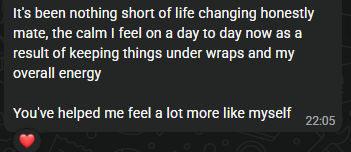

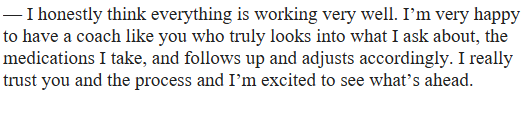

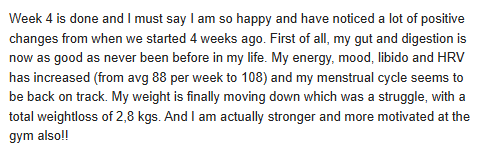
Lead your health with informed support.
A Simple 3 Step Process
This system is designed around you.
Your body, your data, your goals.
1. Investigate
We assess your bloodwork in an unbiased lense, assessing patterns, stress physiology, nutritional gaps, inflammation, and recovery capacity.
So we can remove the guesswork.
2. Assess
We look at your symptoms in context of your bloodwork. How they track against it, rather than viewing them in isolation,
and help you understand them.
So your symptoms finally make sense.
3. Implement
We apply a targeted framework, nutrition interventions, lifestyle, and recovery strategies in a clear, 3-part phasic approach tailored to you.
So you can begin to perform.
This is not about doing more.
It’s about doing what works.
WHO THIS IS FOR
BUILT FOR
High Performers who:
✅ Train hard, but aren’t adapting the way they should
✅ Want bloodwork interpreted in performance context
✅ Competitive athletes - natural or enhanced
✅ Are navigating hormonal dysfunction, peri-menopause, or stress
✅ Executives, businesses, or coaches, who want to set a standard
✅ Want precision, not guesswork
NOT BUILT FOR
This is not for:
❌ People looking for generic meal plans
❌ Those who want quick fixes
❌ Anyone unwilling to execute consistently for 12 weeks
❌ Casual interest without real commitment
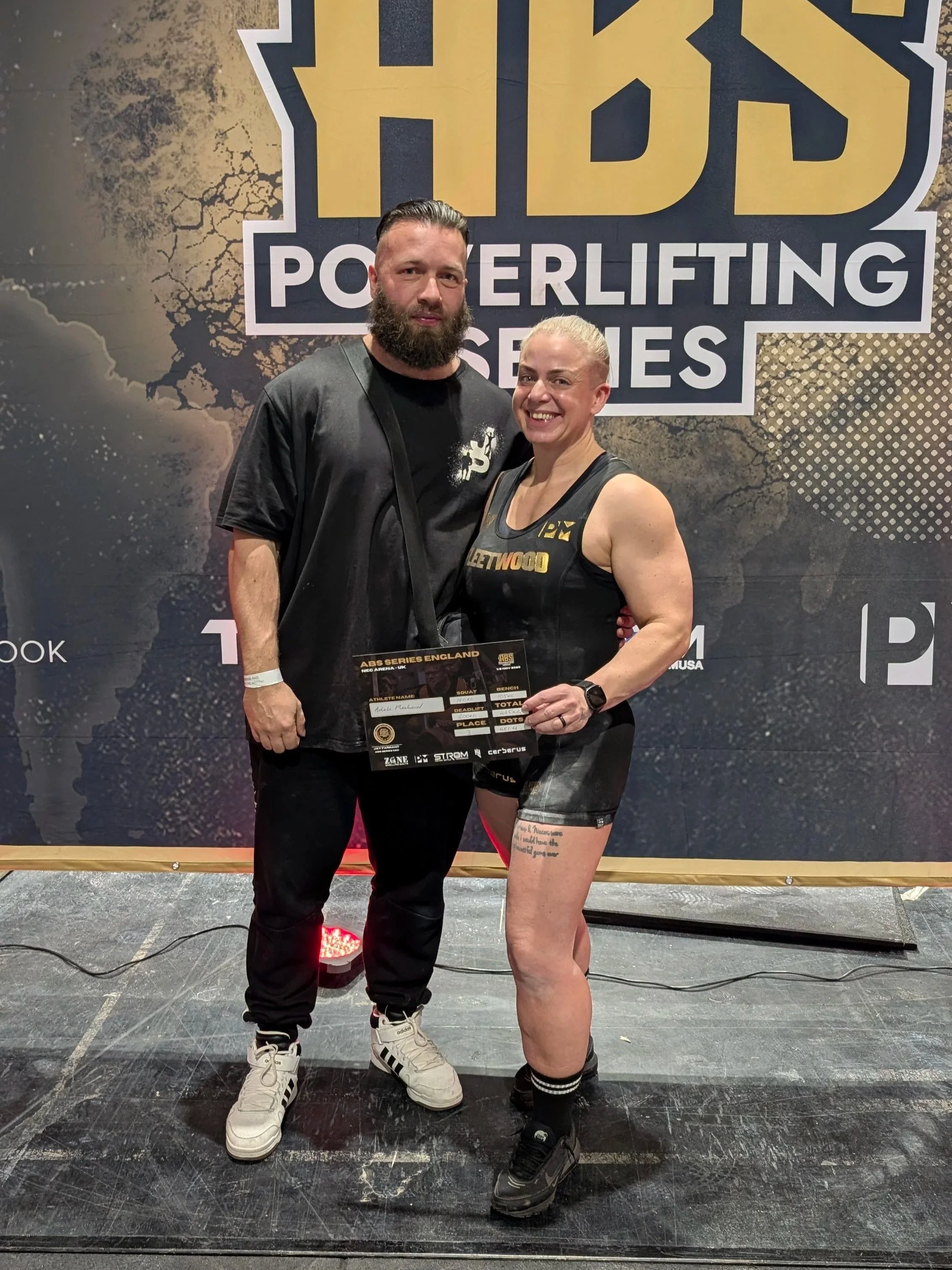
This is the difference between reacting to symptoms, and engineering adaptation.

Get Clarity On Your Performance System
If you want clarity on what state your system is actually operating in, the next step is simple.
We’ll assess where you are, whether this is the right fit for you, and move directly into onboarding if it is.
No pressure.
No generic advice.
No hard sales call.
Just precision
Interpret the signal. Remove the friction.
Frequently Asked QUESTIONS
-
“Normal” reference ranges are built for disease detection, not performance modelling. They are designed to flag pathology, not to determine whether your system is operating optimally under high stress, heavy training demand, or hormonal strain.
We don’t interpret labs against population averages alone. I interpret them in context. That means looking at where markers sit within risk distribution curves, how they trend over time, how they interact with one another, and how they reflect your current stress and recovery environment.
Many markers sit inside conventional reference ranges while still clustering toward patterns that explain fatigue, poor recovery, hormonal instability, or persistent inflammatory tone. Nothing is clinically “wrong,” but the system is not optimised.
In practice, a large proportion of clients who were told their labs were normal still showed identifiable pattern imbalances when viewed through a performance lens. When those patterns are addressed and inputs are stabilised, symptoms often improve, even though nothing appeared abnormal on paper.
Normal does not automatically mean optimal.
-
This is entirely dependent on what, and how much, we’re working with.
Some clients notice benefits within the first week, others within 4-6 weeks, often starting with improved digestion, subtle changes to energy, body composition changes as inflammation starts to shift.
As the weeks progress, other areas start to improve like mental clarity, deeper sleep, more consistent mood etc.
External factors such as stress play a part, which is why adjustments to the plan are made based on your response to the work we’re doing.
This isn’t about quick fixes, but working through a phasic approach knowing which lever to pull at the right time. -
Most coaches manage output. They adjust training volume, tweak calories, rotate supplements, and refine surface-level variables. When progress stalls, the response is usually to change the plan.
We work differently.
We analyse input signals and system state before altering output. That means assessing inflammatory tone, recovery bandwidth, hormonal context, stress load, and how those variables interact over time. If the system is not in a state that can adapt, changing the programme only increases friction.
Progress doesn’t stall because you lack discipline. It stalls because the body is operating in a constrained state, either activated and unable to switch off, or suppressed and unable to switch on. Without identifying that state, coaching becomes guesswork.
This is not about adding another plan. It is about identifying whether your system is positioned to respond to the plan in the first place.
When the underlying signals are clarified and stabilised, output changes become effective rather than reactive.
-
Most nutrition plans focus on calories and macros. They adjust intake based on bodyweight, training volume, or aesthetic goals. That works to a point.
But food is not just fuel. It is signalling.
Nutrition influences inflammatory tone, hormonal regulation, thyroid output, iron handling, methylation capacity, gut integrity, and recovery bandwidth. Two people can follow the same macro targets and respond completely differently because their internal state is different.
We don’t prescribe generic meal templates and then adjust numbers when progress stalls. I use your bloodwork to identify where the system is constrained. That might involve micronutrient insufficiencies, inflammatory clustering, poor stress tolerance, impaired recovery signalling, or subtle hormone dysregulation.
From there, nutrition becomes targeted. Food selection, timing, composition, and strategic supplementation are built to correct the underlying pattern, not just hit calorie targets.
Macros create structure.
Physiology determines response.
We of course take your caloric requirements into account, but we look at how we can get the biggest ROI around that.This is about aligning the two.
-
This is an investment in your performance capacity and long-term health.
Most high performers don’t struggle because they lack effort. They struggle because they’ve spent years adjusting training blocks, hiring coaches, rotating supplements, and running new protocols without ever identifying the underlying constraint.
That trial-and-error approach compounds cost over time. Not just financially, but in lost adaptation, wasted training cycles, stalled progress, and accumulated fatigue.
This work removes guesswork and replaces it with structured interpretation. You gain clarity on how your system is actually functioning, what is limiting output, and how to correct it in a sequenced way.
When recovery stabilises, hormones regulate, and inflammatory load is reduced, performance improves. Energy becomes predictable. Training quality increases. Decision-making sharpens. That ripple effect extends beyond the gym.
The real value is not in a plan. It’s in knowing how your system operates and being able to make informed, precise adjustments moving forward.
-
Yes. Bloodwork is the foundation of the process.
Without objective data, you’re relying on symptoms alone. Symptoms tell you something is off, but they don’t tell you where the constraint sits or how different systems are interacting.
We use blood markers to identify patterns across inflammation, recovery capacity, hormonal context, metabolic function, and stress load. That allows us to determine whether the system is activated, suppressed, or simply misaligned with your current demands.
If you don’t already have recent labs, I’ll guide you on exactly what to test and why. Testing is arranged separately, but I provide clear direction so you’re not running unnecessary panels or missing key markers.
The goal isn’t to collect data for the sake of it. It’s to establish a baseline that allows us to make precise, measurable corrections.
Interpretation first. Intervention second.

Are you ready to understand how your system is actually operating instead of just pushing harder?
Operate with precision instead of guesswork.